Marrakech Mesocosm Facility (MMF)

Name
Marrakech Mesocosm Facility (MMF)
Legal name of organisation
Faculty of Sciences Semlalia, Cadi Ayyad University (CAU), Marrakech
Country
Morocco
Continent
Africa
Organisation address

Marrakech Mesocosm Facility (MMF) is located on the university campus of the Faculty of Sciences Semlalia, Cadi Ayyad University (CAU), Bd. Prince My Abdellah, B.P. 2390, 40000 Marrakech, Morocco

Primary contact information (PI)
Prof. Faissal AZIZ
Years of Mesocosm Experiments
2026 - present
Description of Facility
Established in February 2026 in collaboration with IGB Stechlin (Germany), this pioneering mesocosm facility opens a new chapter in African aquatic research. Operating under real yet controlled conditions, it enables scientists to observe and monitor ecosystem responses to environmental stressors with high precision. Through its interdisciplinary approach and international partnerships, the Marrakech Mesocosm Facility (MMF) is set to generate experimental-derived critical scientific data, thus enabling to inform water policy, support conservation strategies, and sustainable ecosystem management across the Mediterranean region and beyond.

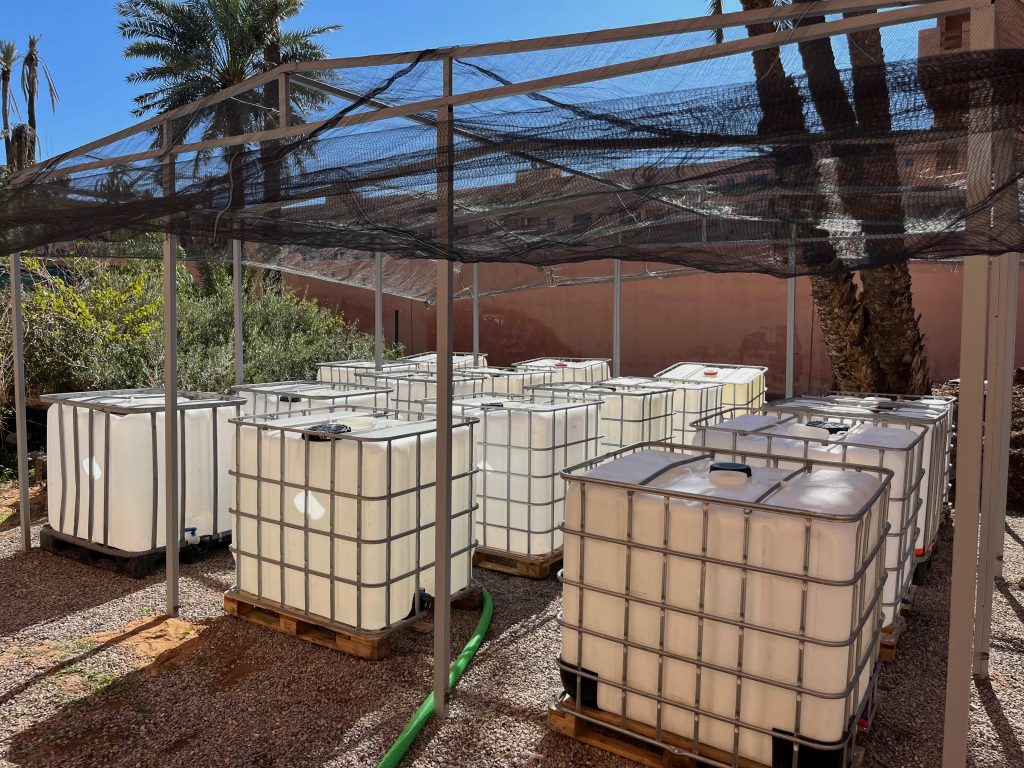
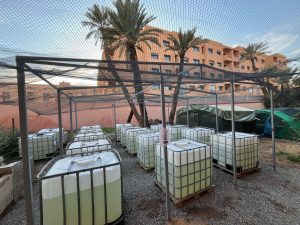
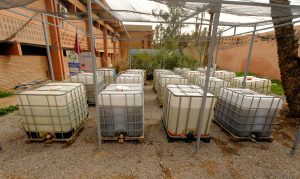
The Marrakech Mesocosm Facility (MMF) marks a significant milestone as Africa’s first permanent aquatic mesocosm facility, launched under the PRIMA project CYCLOLIVE at the Faculty of Sciences Semlalia, Cadi Ayyad University, Marrakech. The MMF consist of 12 outdoor tanks with the capacity of 1 m3 water volume each, located on the CAU campus. MMF is dedicated to experimental aquatic ecology research, with a focus on nature-based solutions, freshwater biodiversity protection, and pollution mitigation. It serves as a hub for Euro-Mediterranean scientific collaboration and contributes directly to the UN Sustainable Development Goals SDG6, SDG13 and SDG14.

The close by laboratories at CAU campus enable biogeochemical measurements of dissolved and total nutrients (orthophosphates (SRP), dissolved N (nitrates, nitrites, ammonium), total nitrogen (TN), total phosphorus (TP), sulfates, as well as chemical and biological oxygen demand (COD, BOD). Measurements of total polyphenols are possible.
The mesocosms can be filled with water from natural sources (e.g. Lake Lalla Takerkoust) or with tap water and inoculations of cultures.
Controlled Parameters
  1. Olive mill waste water (OMWW)
  2. Treated OMWW by constructed wetlands (CW)
  3. Nutrients
  4. Pollutants
Research Topics
  • Ecosystem responses to environmental stressors
  • Environmental impact assessment of olive mill wastewater (OMWW) on freshwater ecosystems
  • Assessment of treated OMWW on ecology of freshwater ecosystems and plankton biodiversity
  • Nature-based solutions (NBS) & constructed wetlands (CW)
  • Stakeholder engagement & policy advocacy
Facility location(s)
31.6490864,-8.0154408
Primary interests

Pollution

Climate Change

Specialist areas
Olive mill waste water, pollution, freshwater, plankton, stressors
Equipment
The MMF can be equipped with multiparameter sensors (AquaTroll-600) and small low-cost sensors (HOBO) in collaboration with partners (e.g. IGB). Measurements of biological parameters incl. HPLC, bacteria, phytoplankton, zooplankton, and DNA need to be discussed and are usually based on collaboration.
Lodging
Airbnb apartments can be booked near the university campus.
Photos of experiments/installations

Marrakesh Mesocosm Facility (MMF)

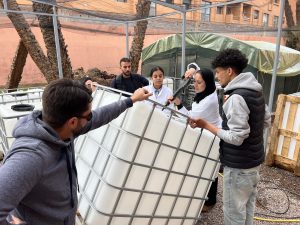
Building up the Mesocosms

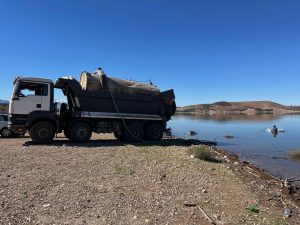
Water truck at Lake Lalla Takerkoust to get water for the mesocosms

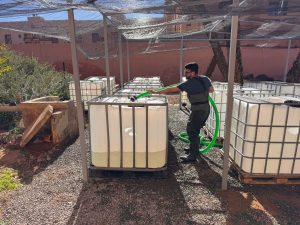
Filling the mesocosm tanks with water from Lake Lalla Takerkoust

Marrakesh Mesocosm Facility (MMF)

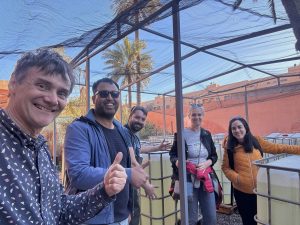
IGB team, Marrakesh CAU PI and partner from UT at the ready set-up mesocosm facility

Olive mill wastewater treatments

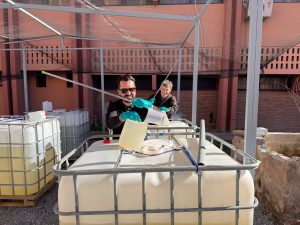
Mixing and aampling the mesocosm water